
Category Archives: Servers
Rack Cabling, Labeling, and Rack Design Standards
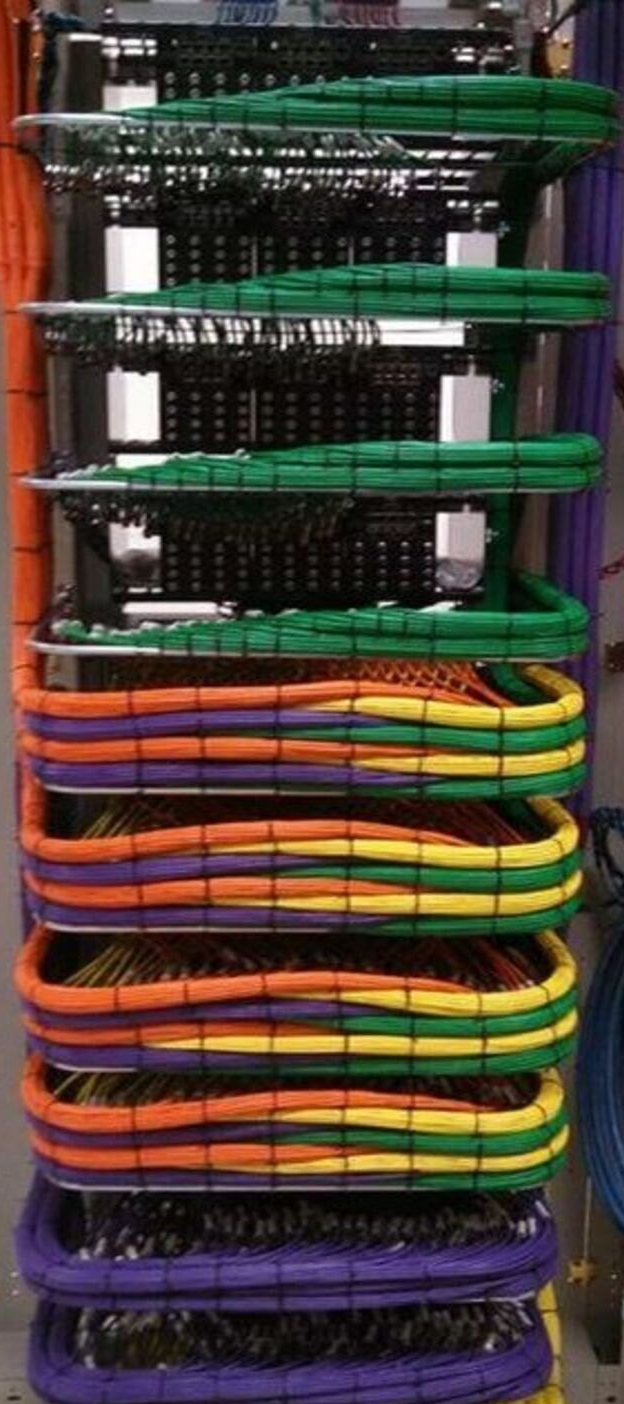
A clean rack is not just about appearance. Proper rack layout, cable management, labeling, power design, and thermal planning directly affect system reliability, serviceability, troubleshooting speed, and long-term support. Whether you are building a conference room rack, broadcast support rack, classroom AV system, control room rack, or equipment enclosure, the goal is the same: every […]
So You Want to Be a Hacker, Eh?

Let’s get one thing out of the way first. No, this is not about breaking into your school’s grading system, guessing your friend’s Instagram password, or “testing” your neighbor’s WiFi. This is about ethical hacking, also known as cybersecurity, where people are actually paid to find problems before the black hats (Malicious or Illegal hackers) […]
How to connect to MS 365 Admin and Exchange via Powershell
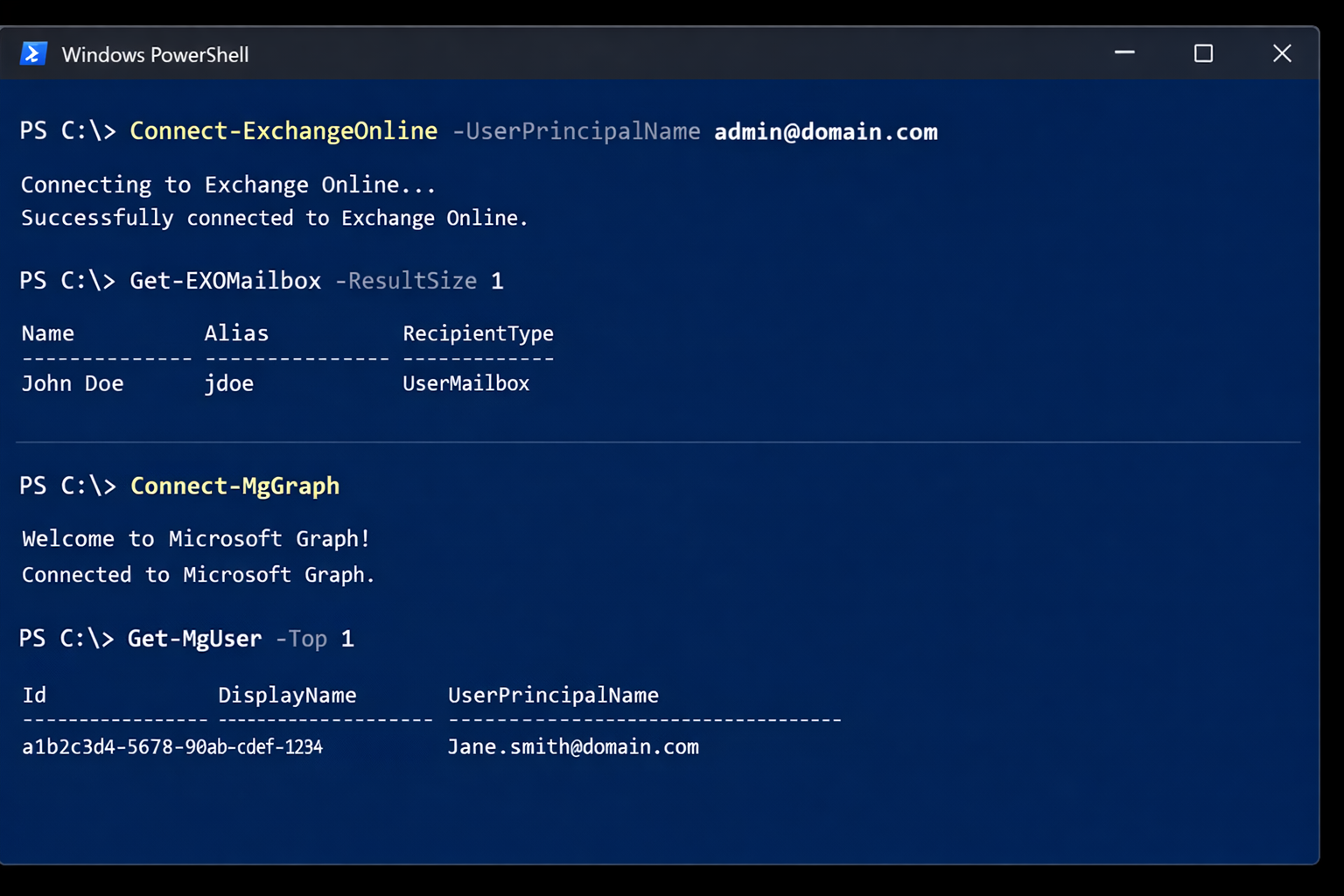
If you manage Microsoft 365, you will typically use two PowerShell modules: Exchange Online PowerShell (ExchangeOnlineManagement) for mail, recipients, transport rules, and mailbox settings. Microsoft Graph PowerShell (Microsoft.Graph) for broader Microsoft 365 and Entra ID administration (users, groups, licensing, devices, and more). This guide shows the exact commands to get connected, plus a detailed breakdown […]
Understanding DNS in Active Directory
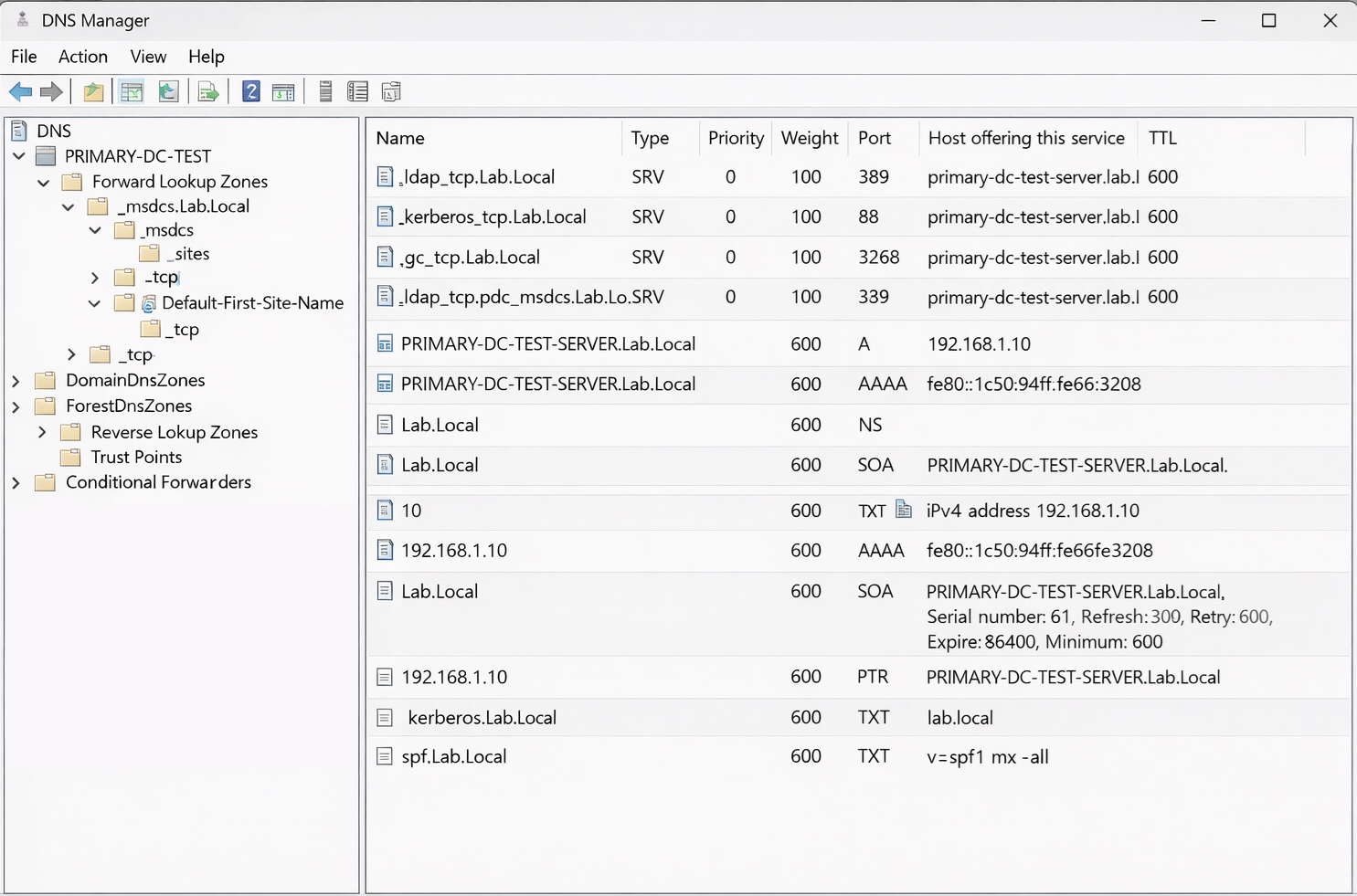
How Domain Controllers, SRV Records, Kerberos, and NETLOGON Actually Work When most people think of DNS, they think of simple name resolution. A hostname resolves to an IP address, and that is it. In an Active Directory environment, DNS plays a much deeper role. It is not just name resolution. It is service discovery, […]
Convert an Exchange Online User Mailbox to a Shared Mailbox Using PowerShell
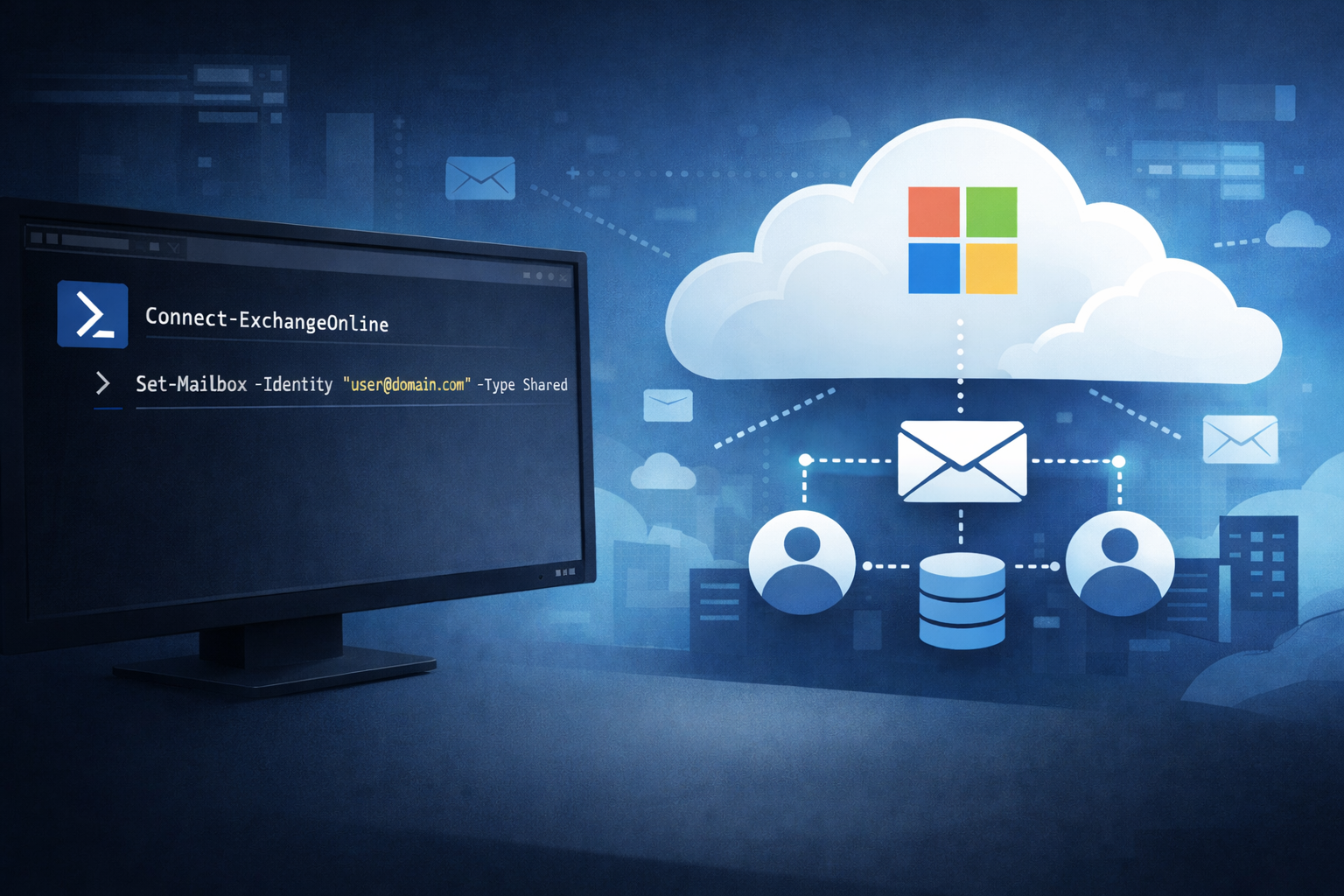
Converting a user mailbox to a shared mailbox is a common offboarding and delegation workflow in Microsoft 365. It lets a team continue to access a mailbox (and optionally send as it) without requiring the mailbox to remain a licensed user, as long as you stay within shared mailbox limits. When this is the right […]
Configuring a Primary Domain Controller to Use DHCP in a Test Lab
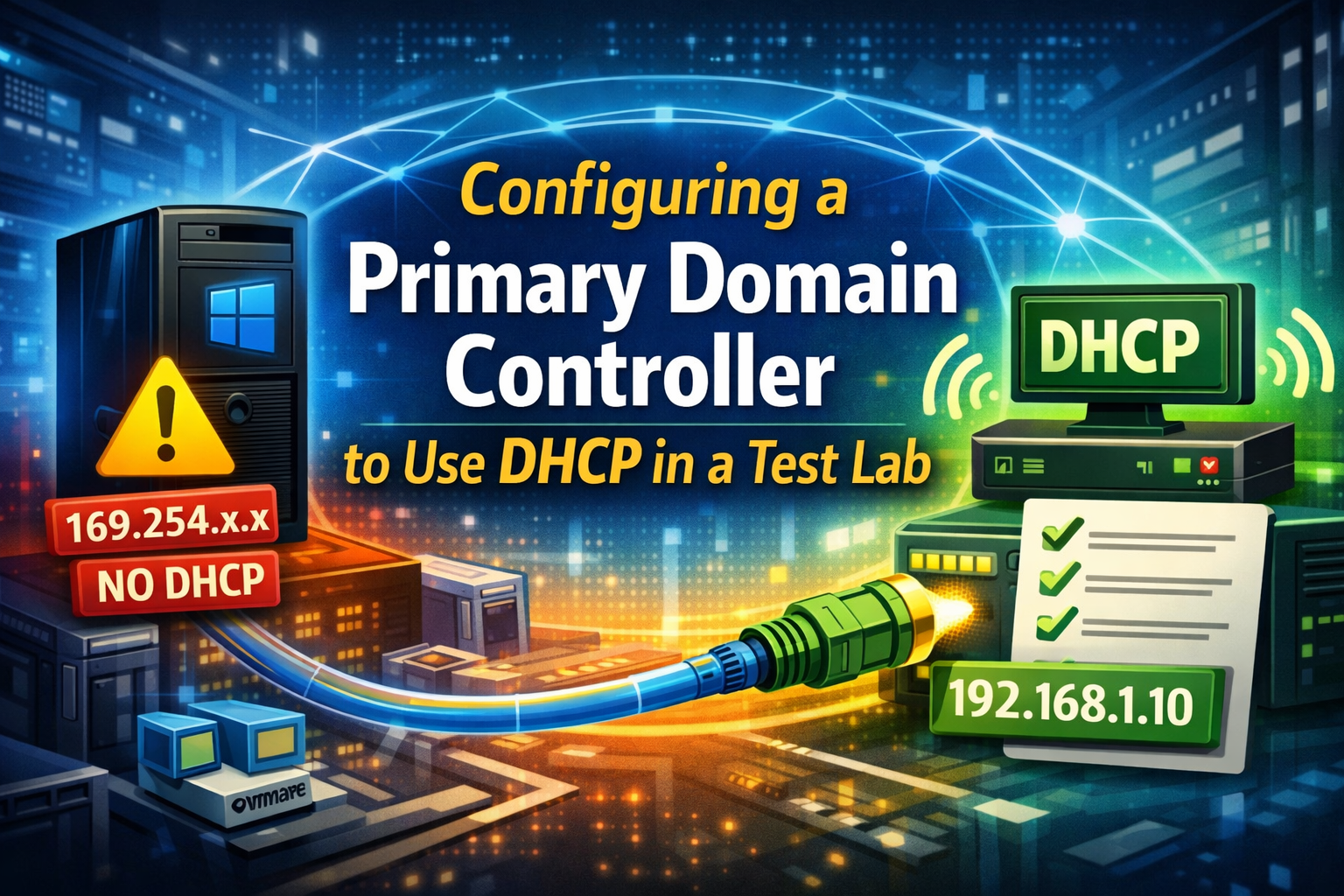
In production environments, domain controllers are almost always configured with static IP addresses. However, in test and lab environments, it is sometimes desirable to allow a primary domain controller to obtain its IP address via DHCP, such as when running inside virtualized lab setups. We will walk through a real troubleshooting scenario where a Windows […]
adsiedit.msc vs dsa.msc: Two Active Directory Tools Every Admin Should Understand

adsiedit.msc vs dsa.msc: Two Active Directory Tools Every Admin Should Understand If you manage Active Directory (AD), you will eventually encounter two long-standing Microsoft management consoles: adsiedit.msc (ADSI Edit) dsa.msc (Active Directory Users and Computers, commonly called ADUC) Although they both interact with the same directory, they serve very different purposes. One is designed for […]
Powershell Script – Get the Most Recent User Login / Logoff Events

This great little Powershell script will generate a .csv file, that you can open in excel, which will list each time a user logged in and logged out from the computer or server you run it on. I believe the only downside is that the list only goes as far back as the logs do […]
VMware Home Lab
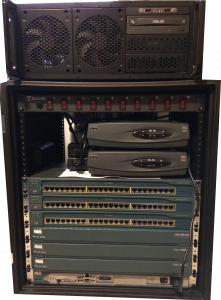
The goal of this home lab is to emulate a small business environment. I use a VMware ESXI server to host a Windows Server 2012 R2 Domain Controller, various “user operating systems” consisting of everything from Windows XP/7/10 to assorted flavors of linux and anything else I would like to evaluate. I then use ESXI’s […]